
Reviewed · WALKING TOURS
Bucharest Past and Present – Step by Step Walking Tour
Bucharest reveals itself one layer at a time. I like this tour because it links the city’s royal, communist, religious, and commercial past in a single walk, and because the private format lets you ask questions without keeping pace with a large group. Guide Marius is praised for his patient storytelling, useful city advice, and ability to adjust the walk to your interests. The main drawback is that language ability may vary, especially for Italian speakers.
I also like the route’s range. You move from University Square and the Revolution Memorial to the enormous Palace of Parliament, then into the smaller-scale streets and courtyards of the Old Town. At $54.07 per person, the price makes the most sense for a private group that wants context and personal attention, rather than for someone seeking museum admissions or a short photo walk.
In This Review
- Key points at a glance
- Why this Bucharest walk works
- University Square and the first look at modern Bucharest
- Revolution Square and the marks of communist rule
- The Royal Palace and Romanian art
- The Palace of Parliament and the scale of dictatorship
- Stavropoleos Monastery, a quieter change of pace
- CEC Palace and the city’s grand financial face
- Lipscani and the old merchants’ quarter
- National History Museum and the Victoriei connection
- The Romanian Atheneum and the optional interior
- Guide quality, language, and pace
- Price, duration, and who gets good value
- Who should book this walking tour
- Should you book Bucharest Past and Present?
- FAQ
- Where does the Bucharest walking tour begin?
- Where does the tour end?
- How long does the tour last?
- Is this a private tour?
- What languages are offered?
- What is included in the price?
- Are meals and drinks included?
- Are tips for the guide included?
- Can you visit the Romanian Atheneum inside?
- What happens if bad weather cancels the tour?
Key points at a glance
- A private walk through four Bucharest eras: Royal Romania, communist rule, the 1989 Revolution, and the old merchant quarter all appear on the route.
- Marius earns the strongest praise: His calm manner, historical explanations, flexibility, and help with metro directions are major advantages.
- No major admission costs are included: Most stops are viewed from outside, and meals, drinks, tips, and the optional Atheneum interior visit cost extra.
- The walk can run longer than advertised: The stated duration is about two to three hours, but a flexible private visit may last three and a half hours.
- Best for first-time visitors: The end in Old Town gives you a useful starting point for later exploring, dining, and independent walks.
- Language matters: English is offered, with an experienced guide who may also speak French or Italian, but Italian fluency has not been consistent for every booking.
Why this Bucharest walk works
This is a city-orientation tour with a strong historical thread. You begin near the National Theatre, walk through the central squares, pass grand state buildings, and finish in the Old Town. That order helps you understand Bucharest as a city shaped by royal ambition, dictatorship, revolution, religion, and trade.
I like the fact that the tour does not stay in one polished district. The route shifts from broad boulevards and monumental buildings to the narrow streets of Lipscani. You get a better sense of Bucharest’s contrasts, rather than seeing only its postcard corners.
The private setup is important. Your group alone takes part, so you can ask about architecture, political events, or the people behind them. One couple found that Marius adjusted the pace to suit their walking speed and spent longer on topics that interested them. That flexibility is harder to get on a standard group outing.
The tour is advertised at two to three hours, but plan with some room. One private visit lasted three and a half hours, partly because the group had many questions. If you have a fixed lunch booking or timed attraction afterward, avoid scheduling it too tightly.
More Walking Tours in Bucharest
- Bucharest: City Highlights Guided Walking Tour
★ 4.9 · 1,482 reviews - Bucharest Highlights Walking Tour
★ 5.0 · 469 reviews - Bucharest: Ghost Stories & Romanian Mythology Walking Tour
★ 4.9 · 287 reviews
University Square and the first look at modern Bucharest
The meeting point is the Ion Luca Caragiale National Theatre on Bulevardul Nicolae Bălcescu 2. This is a practical starting place near public transportation, and the theatre gives you an easy landmark for finding your guide.
The first stop is University Square, with the National Theatre and the Revolution Martyrs Memorial. You spend about 15 minutes here, looking at the buildings and memorial space while your guide sets the scene for the city’s recent past.
This is a useful opening because Bucharest’s history is not confined to old churches and grand palaces. The square connects everyday urban life with the events that changed Romania. Expect an introductory stop rather than a long visit inside a building. Admission is free because the tour focuses on the exterior.
Families can do well here. Marius has been especially praised for keeping children and teenagers involved, and the open setting makes this an easy place to begin before the longer walk.
Revolution Square and the marks of communist rule
The route then moves to Revolution Square, where you see the former Royal Palace, the Romanian Atheneum, the former Communist Party Headquarters, and the Rebirth Memorial. Allow about 30 minutes, making this the most substantial stop on the walk.
This square gives the tour its clearest political weight. Royal architecture sits close to the buildings tied to communist power, while the memorial points toward the 1989 Revolution. Your guide can help connect those structures, rather than leaving you with a set of impressive facades and unfamiliar names.
The Rebirth Memorial is one of those places where an explanation helps. Without context, it can be puzzling. With a guide, it becomes part of the discussion about memory, public space, and Romania’s break with dictatorship.
You will not enter every building here. The value comes from standing in the square, looking at the relationship between them, and hearing how Bucharest changed. If you want extensive indoor time at museums or historic interiors, this tour may feel too exterior-focused.
The Royal Palace and Romanian art
The National Museum of Art of Romania occupies the former Royal Palace. The walk passes along the front for roughly five minutes, giving you a quick look at one of the city’s key royal buildings.
This brief stop works best as part of the larger story. You see how the monarchy’s presence remains in central Bucharest, even though the tour does not include museum admission or an art collection visit.
If Romanian painting and sculpture are high on your list, save separate time for the museum. Here, your guide’s explanation and the building’s exterior are the focus. That keeps the walk moving, but it also means art lovers should not mistake this stop for a museum tour.
More walking tours:
- Bucharest: Guided Walking Tour with Romanian Snack
★ 4.9 · 228 reviews - Best of Bucharest | Private Walking Tour
★ 5.0 · 199 reviews - Walking Tour- Delightful Bucharest (Highlights, Stories, Sights)
★ 5.0 · 145 reviews - 4h Bucharest Private Tour (2h by Car and 2h Walking in Old Town)
★ 5.0 · 90 reviews
The Palace of Parliament and the scale of dictatorship
The Palace of Parliament, often called the People’s House, receives about 15 minutes. The building was ordered by the dictator, and its sheer scale helps explain the ambition and cost of the project.
This is one of the route’s major visual moments. You are looking at a structure designed to project state power, not intimacy or comfort. A guide adds needed context because the exterior alone tells only part of the story.
The provided details describe a pass-by style visit with no admission included. Do not expect an interior tour of the parliament building as part of this walk. If entering the building is important to you, ask about separate arrangements before booking.
There is also a practical point here: the Palace is not the end of the experience. The route continues toward the historic center, so you get both the monumental communist city and the older streets that existed before it.
Stavropoleos Monastery, a quieter change of pace
Stavropoleos Monastery dates to 1724 and receives about 10 minutes. After the broad avenues and political monuments, this small Orthodox monastery offers a more human scale.
Its age makes it a useful reminder that Bucharest is not only a 20th-century political story. The stop brings religion, craftsmanship, and older urban life into the route. Even a short visit can add balance to the heavier discussion of dictatorship and revolution.
The tour does not list an admission fee here, and the walk does not promise a long religious visit. Dress and behavior should be respectful at any active religious site. Your guide can provide the historical background, while you take in the architecture and courtyard atmosphere at a measured pace.
CEC Palace and the city’s grand financial face
Palatul CEC appears for about five minutes. Its eclectic architecture gives you another view of Bucharest’s taste for ambitious public buildings.
This is a short exterior stop, but it fits neatly between the monastery and Lipscani. I like these quick architectural pauses because they help you read the city as you walk. Not every building needs a long lecture. Sometimes a clear explanation about style, purpose, and period is enough.
The tour is strongest when these stops are treated as pieces of a larger route. If you prefer to spend 20 minutes photographing each facade, the advertised two to three hours may not be enough. A private guide can adjust, but added time may be needed.
Lipscani and the old merchants’ quarter
Lipscani is the route’s most atmospheric section. You spend about 15 minutes on the famous merchants’ street, once associated with trade and commerce.
Here the mood shifts again. The large squares and official buildings give way to the Old Town’s tighter streets and historic storefronts. This is where you can connect Bucharest’s past to its present social life, with restaurants and places to continue exploring after the tour.
The walk ends in Old Town, which is a smart choice. You finish near food and independent sightseeing rather than being returned to the starting point. Marius has also recommended restaurants and other places beyond the formal route, making the tour more useful at the start of a short Bucharest stay.
Keep in mind that Old Town is not presented as an exhaustive neighborhood tour. You get a guided introduction, then can return on your own for a slower look.
National History Museum and the Victoriei connection
The National Museum of Romanian History is passed on Calea Victoriei for about five minutes. Like the National Museum of Art, it is an exterior viewing stop rather than an included museum visit.
Its position on the route helps tie together Bucharest’s central institutions. You are not simply moving from one attraction to the next. You are walking along streets where royal, national, and communist stories overlap.
If you want to visit the museum inside, set aside another part of your schedule. The tour’s strength is breadth. It introduces many sites in one outing, then leaves you free to choose which deserve a longer return visit.
The Romanian Atheneum and the optional interior
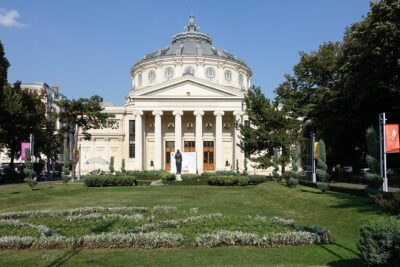
The Romanian Atheneum appears twice in the route description, first as part of Revolution Square and later as a five-minute exterior visit. In practice, treat it as one of the square’s key buildings, with a possible second look as the walk continues.
The exterior is included, but the entrance lobby and concert hall may be visited only if available, and that interior visit is not included in the price. This is an important limitation for music and architecture fans. The building may be a highlight, but access is not guaranteed.
Ask your guide about availability on the day. If the doors are open and time permits, the interior can add a welcome change from the steady sequence of outdoor facades. If not, you still receive the exterior explanation and view.
Guide quality, language, and pace
The guide is central to the value here. Marius receives repeated praise for being pleasant, patient, and well prepared, with strong explanations of Bucharest’s events, buildings, people, and daily life. He has also helped a family find its way back to the hotel by metro, which is exactly the sort of practical assistance that can save you time in a new city.
The personal approach seems especially useful if your group learns in different ways. One person may want architecture and political events, while another wants stories about the people involved. A private guide can move between those interests instead of following a fixed script.
English is offered, and the guide is described as speaking English, French, and Italian. Still, one Italian-language booking received a poor assessment because the guide’s Italian was considered limited and the explanations insufficient. If Italian is essential, confirm the language level before paying.
The private format also means the pace belongs to you. You can ask for more detail, request restaurant suggestions, or spend longer at a site. That freedom is a major reason to choose this tour over a cheaper large-group walk.
Price, duration, and who gets good value
At $54.07 per person, this is not a bargain-priced orientation walk, but it can be fair value for a private experience. The fee covers an experienced English, French, or Italian-speaking guide, and your group does not share the walk with strangers.
The value is strongest for two or more people who want personal attention. You are paying for interpretation and flexibility, not for entry tickets. Meals, drinks, tips, and any optional Atheneum interior visit are not included.
For a solo visitor, the price may feel less attractive. For a family, couple, or small group staying only a few days, the cost can make sense because the walk covers many central sights in one session.
The tour is recommended by 94 percent of those who rated it, with an overall score of 4.8 from 18 reviews. That is a strong result, though the sample is not large. I would put more weight on the repeated praise for Marius’s patience and adaptability than on the score alone.
Book early if your schedule is fixed. The experience is booked an average of 25 days ahead, suggesting that popular dates may fill before your arrival.
Who should book this walking tour
I would choose this tour if you are visiting Bucharest for the first time, have two or three days, and want the city explained before exploring on your own. It is also a good fit for families, couples, and small groups with mixed interests.
You will get the most from it if you enjoy walking, outdoor sights, political history, architecture, and local orientation. It is less suitable if you want long indoor visits, a museum-focused route, or a guaranteed tour inside the Palace of Parliament or Romanian Atheneum.
Wear practical walking shoes and leave room for the tour to run longer than two hours. Bucharest is described by one couple as easy to walk, but your own pace and questions can add time.
Cancellation is free up to 24 hours before the start time. The experience requires good weather, so a poor-weather cancellation brings a choice of another date or a full refund.
Should you book Bucharest Past and Present?
Book it if you want a private introduction that joins Bucharest’s royal buildings, communist monuments, revolution sites, Orthodox heritage, and Old Town in one coherent walk. The route is broad, the end point is useful, and Marius’s patient style appears to be the tour’s strongest asset.
Skip it if you mainly want paid interiors or a quick checklist of photo stops. For most first-time visitors who value stories, questions, and practical city advice, this is a strong way to get your bearings before exploring Bucharest on your own.
FAQ
Where does the Bucharest walking tour begin?
It begins at the Ion Luca Caragiale National Theatre, Bulevardul Nicolae Bălcescu 2, Bucharest.
Where does the tour end?
The tour ends in Bucharest Old Town.
How long does the tour last?
The stated duration is approximately two to three hours. A private visit may last longer, with one reported tour lasting three and a half hours.
Is this a private tour?
Yes. Only your group takes part in the activity.
What languages are offered?
The tour is offered in English. The guide service is described as available in English, French, and Italian, but Italian fluency should be confirmed in advance if it is important to you.
What is included in the price?
The price includes a private tour with an experienced guide.
Are meals and drinks included?
No. Meals and drinks are not included.
Are tips for the guide included?
No. Gratuities and tips are not included.
Can you visit the Romanian Atheneum inside?
An interior visit to the entrance lobby and concert hall may be possible if available. It is optional, and admission is not included.
What happens if bad weather cancels the tour?
You will be offered a different date or a full refund if the experience is canceled because of poor weather. You can also cancel for a full refund up to 24 hours before the start time.
Just added around Bucharest
- 10 hours Private Apiary Tour in Romania – From Bucharest★ 5.0 · 3 reviews
- 4-Day Inside Transylvania & Transfagarasan Tour from Bucharest★ 5.0 · 3 reviews
- Bucharest: Charm of the Belle Époque Private Tour★ 5.0 · 3 reviews
- Bran & Peles Castles through the Best Road in the World: Transfagarasan road★ 4.5 · 3 reviews
- Private Wine Tasting at Bucharest’s First Wine Bar★ 5.0 · 3 reviews
- 2-Day Small-Group Tour in Transylvania from Bucharest – Maximum 5 Persons★ 5.0 · 3 reviews
- Probably the Best Restaurant and Wine Cellar near Bucharest★ 4.5 · 3 reviews
- Bucharest to Brasov – Fast Private Transfer★ 5.0 · 3 reviews
Walking Tours, compared.


Ghost Stories & Romanian Mythology Walking Tour
Read our review →
Walking Tour- Delightful Bucharest (Highlights, Stories, Sights)
Read our review →
Browse the lists this tour appears in