Reviewed · TOURS
Bucharest Old Centre Tour
Bucharest reveals itself on foot. This one-hour private walk gives you a quick, useful introduction to the city’s oldest quarter, linking the Princely Old Court, Lipscani Street, old inns, churches, banks, and the former post office. I like the small private format and the way the route packs several important sights into a short visit. I also like the choice of morning or afternoon departure, which makes it easy to fit around your plans.
The main drawback is the pace. One hour is enough to get your bearings and hear the key stories, but not enough for long visits inside the sights. The old centre is also paved with uneven flagstones, so sturdy shoes are more useful here than fashionable ones.
In This Review
- Key points at a glance
- Why this short walk works in Bucharest
- Starting at the National Museum of Romanian History
- Entering a 500-year-old centre
- The Old Princely Court and Vlad the Impaler
- St Anthony Church and the Wallachian rulers
- Historic inns and the story of trade
- Lipscani Street, the old centre’s main thread
- The National Bank and Șerban Voda Inn
- Stavropoleos Monastery and the final stretch
- What $16.77 buys you
- Timing, walking, and who should book
- My booking advice
- FAQ
- How long does the Bucharest Old Centre Tour last?
- What is the price of the tour?
- Where does the tour start?
- Where does the tour end?
- Is hotel pickup available?
- Is this a private tour?
- Can I choose the departure time?
- Are food and drinks included?
- Can I cancel for a refund?
Key points at a glance
- A compact private walk: Only your group takes part, so the guide can keep the experience personal.
- Vlad the Impaler’s former home: The ruins of the Old Princely Palace connect modern Bucharest with one of Wallachia’s best-known rulers.
- A strong run of historic stops: You pass the National History Museum, St Anthony Church, Lipscani Street, historic inns, the National Bank, and Stavropoleos Monastery.
- A guide-led introduction: The route helps you understand the city’s past and present instead of simply collecting photographs.
- Flexible timing: You can choose a morning or afternoon departure, with pickup and drop-off available from selected central hotels.
- Good value for a short orientation: At $16.77 per person, the tour is inexpensive if you want context before exploring on your own.
Why this short walk works in Bucharest
Bucharest’s old centre can look like a jumble at first. You find grand stone buildings beside worn facades, busy restaurant streets beside quiet courtyards, and fragments of medieval Bucharest tucked between newer construction. Without a guide, it is easy to walk past an important site without knowing what you are seeing.
This tour gives you a basic map of the area in about an hour. You move from the National Museum of Romanian History into the old centre, then follow a chain of sites tied to rulers, merchants, inns, churches, banks, and trade streets. That sequence matters because Bucharest’s story is not held in one grand monument. It is spread across small remains and buildings with changing uses.
I especially like the route for a first morning in the city. You can use the hour to learn which streets and buildings deserve a longer visit later. If you already know Bucharest well, the tour may feel too brief, unless you want a local guide to add background and point out details you would otherwise miss.
This is a private activity, not a large group walk. That gives you a more relaxed setting for questions and avoids the stop-and-start feel of a crowded tour. The experience is still tightly timed, so you should think of it as an introduction rather than a full historical tour.
A few more trips worth weighing up before you book
- Bucharest: Dracula’s Castle, Peles Castle, & Brasov Old Town
★ 4.5 · 17,858 reviews - Bucharest: Dracula Castle, Peles Castle & Brasov Old Town
★ 4.6 · 10,891 reviews - Bucharest: Dracula’s Castle, Peleș Castle & Brașov Day Trip
★ 4.5 · 5,919 reviews
Starting at the National Museum of Romanian History
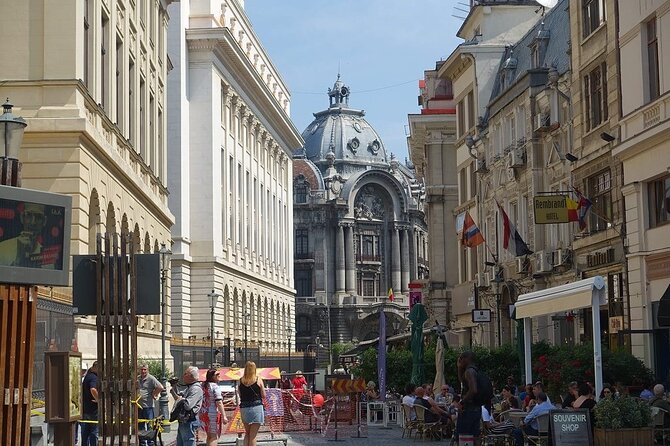
The meeting point is the National Museum of Romanian History at Calea Victoriei 12. This is a practical starting place because the museum itself occupies the former Post Office building, giving the tour an immediate connection to Bucharest’s civic and architectural past.
You hear about the museum and its building before entering the old centre. The route does not promise a museum visit, so do not expect time to explore the collections during the walk. Instead, the stop provides context for the city around you and helps explain how Bucharest developed beyond its medieval core.
The location also gives you a clear reference point for independent sightseeing. Since the tour ends back at the meeting point, you can continue along Calea Victoriei or return to another central sight after the walk.
Selected central hotels may have pickup and drop-off. If you plan to use that option, check that your hotel is included when booking. The stated meeting point remains the National Museum of Romanian History, so it is wise to confirm the exact pickup arrangement rather than assume every central hotel qualifies.
Entering a 500-year-old centre
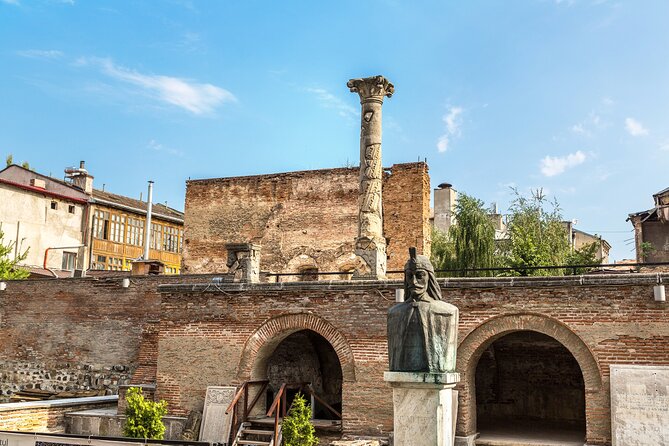
The old centre has more than 500 years of culture and urban change behind it. The guide introduces the area through its main streets and surviving traces, helping you see it as more than a restaurant district.
The first part of the walk covers places such as the Princely Old Court, the Old Coffee House, Gabroveni Inn, Linden Tree Inn, and the ruins of Șerban Voda Inn. These names point to the working life of old Bucharest: rulers, traders, visitors, food, lodging, and movement through the city.
Several of these sites are ruins or historic references rather than polished attractions. That is part of the appeal, but it also shapes your expectations. You are not walking through a perfectly preserved medieval quarter. You are reading fragments of the past in a living city.
A local guide adds value here because the details can be easy to miss. The guide explains why a building or ruin matters, rather than leaving you to guess from a plaque. Alina, one of the guides associated with this experience, is praised for explaining several eras of Bucharest with humor and personal feeling. Her connection to the area gives the walk a more local tone when she is leading it.
The Old Princely Court and Vlad the Impaler

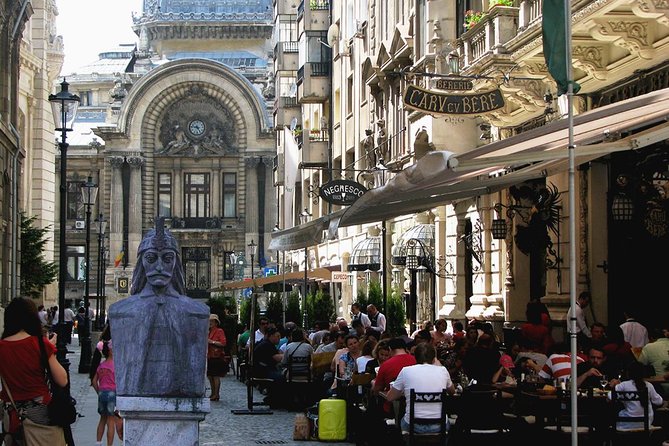
The ruins of the Old Princely Palace are one of the tour’s most memorable stops. This is among Bucharest’s oldest buildings, and it was once the residence of Vlad the Impaler, the Wallachian ruler whose name is closely linked with the Dracula legend.
The stop is valuable because it grounds a famous historical figure in a real place. You are not simply hearing about Vlad in the abstract. You are looking at the remains of a residence connected with his rule and with the early development of Bucharest.
At the same time, the ruins will not provide the scale or intact rooms of a grand European palace. The attraction is the story, the location, and the surviving remains. The guide’s explanation does much of the work, making this one of the places where a short tour is more useful than a self-guided walk.
If you want a long visit or detailed architectural study, one hour will not be enough. If you want a clear introduction to Bucharest’s medieval and princely past, this is an efficient stop.
A completely different kind of day out around Bucharest:
- Bucharest: Palace of Parliament Tickets and Guide
★ 4.3 · 3,182 reviews - Bucharest: Day Trip to Dracula Castle, Peles Castle & Brașov
★ 4.4 · 3,049 reviews - Bucharest to Dracula Castle, Peles Castle and Brasov Guided Tour
★ 4.5 · 2,933 reviews - Bucharest: Palace of Parliament Tickets and Guided Tour
★ 4.4 · 1,877 reviews
St Anthony Church and the Wallachian rulers
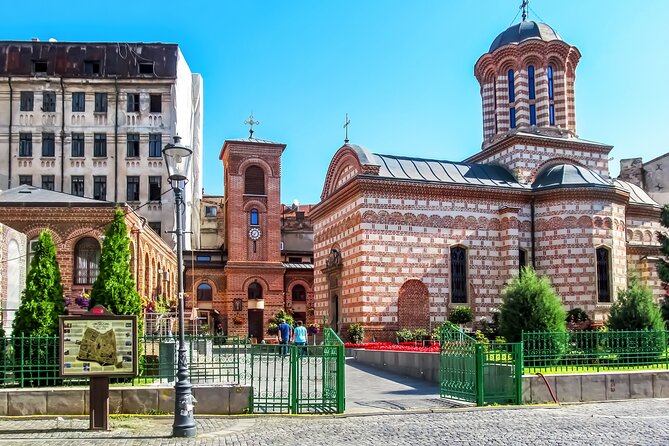
St Anthony Orthodox Church sits in the heart of the old centre. The church is linked with Wallachian rulers, which gives the stop a direct connection to the political and religious life of earlier Bucharest.
The tour focuses on the church’s history rather than promising an extended religious visit. You learn why the building mattered and how it fits into the old quarter. That is useful if you are passing through quickly and want more than a photograph of the exterior.
Churches in historic city centres often reward quiet attention, but this itinerary is brisk. You may find that you want to return later if the building catches your interest. The guide can give you the background first, then you can decide where to spend extra time.
Because this is an Orthodox church, respectful behavior and suitable clothing are sensible, even though specific dress rules are not stated. The experience includes no food or drinks, so plan any café stop before or after the walk.
Historic inns and the story of trade
The route includes Bucharest’s oldest and most famous inn, along with another ancient inn in the oldest part of the city. Gabroveni Inn, Linden Tree Inn, and the remains of Șerban Voda Inn are part of this section of the walk.
These stops help you picture how the old centre worked before modern hotels and broad commercial streets. Inns were places for lodging, business, news, and contact between people moving through Wallachia. Their presence shows that Bucharest was not only a seat of rulers and churches. It was also a trading and meeting centre.
The inn stops may appeal most to people who enjoy urban details and everyday history. You get a sense of how ordinary commerce shaped the district, even when only ruins or historic references remain.
Do not expect every inn to function as a museum attraction during the tour. The guide’s explanation is the main experience. That is why the private format matters: you can ask how these places relate to the streets around them instead of simply ticking them off.
Lipscani Street, the old centre’s main thread
Strada Lipscani is the heart of Bucharest’s old centre and one of the route’s easiest points to understand. It ties together many of the surrounding sights and gives you a feel for the area as a living part of the city.
Lipscani is also where the contrast between old and new becomes most obvious. Historic buildings and old street patterns share space with modern businesses and visitors. The tour helps you look past the surface activity and notice the street’s place in Bucharest’s wider story.
I like this stop because it gives you a practical base for later exploration. Once you know Lipscani, you can return to the surrounding lanes with more confidence. The walk is short enough that you will still have time afterward to browse, eat, or visit another attraction.
The paving deserves a warning. One review specifically recommends sturdy shoes for the flagstones, and that is sound advice. Comfortable footwear will make the walk easier, especially if the stones are uneven or your plans include more walking after the tour.
The National Bank and Șerban Voda Inn
The National Bank of Romania adds a grander architectural note to the route. You hear about the bank’s interesting past and see how financial power became part of the old centre’s story.
This stop broadens the tour beyond medieval rulers and religious buildings. Bucharest’s identity also grew through commerce, banking, administration, and national institutions. The National Bank helps connect the older quarter with the city’s later economic development.
Nearby, you see the ruins of the former Șerban Voda Inn. The pairing works well. One site represents an older age of lodging and trade, while the other points to a more formal financial city. The guide uses these contrasting places to show how Bucharest changed over time.
The bank is a viewing stop, not a promise of interior access. If architecture is your main interest, you may want to return on your own for a closer look, if access is available. During the tour, the historical explanation is the focus.
Stavropoleos Monastery and the final stretch
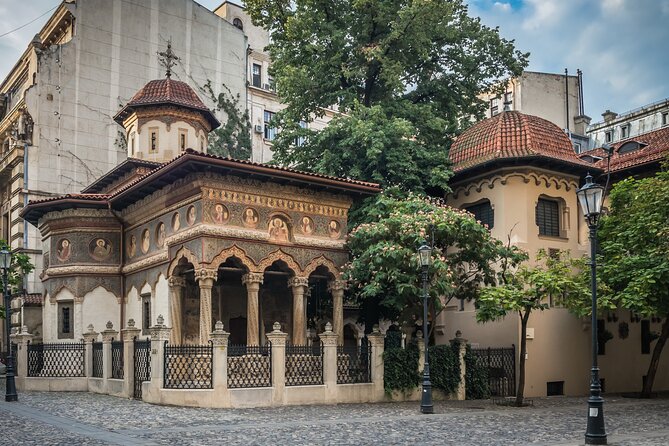
Stavropoleos Monastery was built in 1724 and provides a graceful closing point for the old-centre walk. Its age and religious setting add another layer to the story of Bucharest, after the earlier stops focused on rulers, inns, trade, and finance.
The monastery is especially useful as a reminder that Bucharest’s past is not only political. Faith, craftsmanship, and community life also shaped the city. You learn about the monastery’s history while seeing how it sits within the busy old centre.
The tour does not state that you receive a long interior visit or a full religious service experience. Treat it as an important historical stop within a guided route. If you want to linger, take photographs, or study details, you may need to return after the tour.
The walk ends back at the National Museum of Romanian History. That makes the route easy to follow and gives you a known point for the next part of your day.
What $16.77 buys you
At $16.77 per person, this is a low-cost way to add structure and local explanation to your first look at Bucharest. The value comes less from the number of minutes and more from the number of meaningful places covered in that hour.
You receive a local professional guide, a private experience for your group, and a route that includes several of the old centre’s most important historical markers. Pickup and drop-off from selected central hotels can add convenience, though you should confirm eligibility before relying on it.
The price is strongest for people who would otherwise walk through the district without context. A self-guided visit costs less, but you would need to research the Princely Court, the inns, the churches, the museum building, and the bank yourself. This tour saves that preparation time.
The value is weaker if you expect admission tickets, meals, or a long visit inside every attraction. Food and drinks are not included, and the experience lasts about one hour. Think of it as a focused orientation, not a full day of sightseeing.
Timing, walking, and who should book
You can choose a morning or afternoon departure. Morning works well if you want to understand the city before setting off on your own. Afternoon suits you if you arrive later or prefer to spend the first part of the day at museums and other sights.
Most people can take part, and children are welcome when accompanied by an adult. Since this is a walking tour over old paving, comfortable shoes matter for everyone, especially children and anyone who dislikes uneven surfaces.
The private format suits couples, families, and small groups who want to ask questions or keep the pace personal. It also works for solo visitors who prefer a guide but do not want to join a large group.
The tour is less suitable if you need step-free conditions or want a slow route with frequent seating, since the information provided does not promise those features. It also requires good weather. If poor weather causes cancellation, you are offered another date or a full refund.
Free cancellation is available up to 24 hours before the start time. Cancellations or changes made less than 24 hours ahead are not refunded or accepted, and the cut-off follows local time.
My booking advice
I would book the Bucharest Old Centre Tour if you have only a short time in the city or want help getting oriented on your first day. The combination of Vlad the Impaler’s former residence, old inns, Lipscani Street, St Anthony Church, the National Bank, and Stavropoleos Monastery gives you a useful framework for later exploring.
I would also choose it if you care about local stories more than long interior visits. The strongest part of the experience is the guide’s ability to connect scattered buildings and ruins into a readable story. Alina receives particular praise for her humor, local roots, and command of Bucharest’s different eras.
I would skip it if you want a detailed palace tour, museum visit, or leisurely church inspection. One hour moves quickly, and the flagstones call for practical shoes. For the price, though, it is a sensible, compact introduction to Bucharest’s old centre, especially when you want history with your first walk.
FAQ
How long does the Bucharest Old Centre Tour last?
The tour lasts approximately one hour.
What is the price of the tour?
The listed price is $16.77 per person.
Where does the tour start?
It starts at the National Museum of Romanian History, Calea Victoriei 12, București 030026, Romania.
Where does the tour end?
The activity ends back at the meeting point, the National Museum of Romanian History.
Is hotel pickup available?
Pickup and drop-off are offered from selected central hotels only.
Is this a private tour?
Yes. Only your group participates in the activity.
Can I choose the departure time?
Yes. You can choose between a morning and an afternoon departure.
Are food and drinks included?
No. Food and drinks are not included.
Can I cancel for a refund?
Yes. You can cancel up to 24 hours before the experience starts for a full refund. If poor weather causes the tour to be canceled, you are offered a different date or a full refund.
Just added around Bucharest
- 10 hours Private Apiary Tour in Romania – From Bucharest★ 5.0 · 3 reviews
- 4-Day Inside Transylvania & Transfagarasan Tour from Bucharest★ 5.0 · 3 reviews
- Bucharest: Charm of the Belle Époque Private Tour★ 5.0 · 3 reviews
- Bran & Peles Castles through the Best Road in the World: Transfagarasan road★ 4.5 · 3 reviews
- 2-Day Small-Group Tour in Transylvania from Bucharest – Maximum 5 Persons★ 5.0 · 3 reviews
- Private Wine Tasting at Bucharest’s First Wine Bar★ 5.0 · 3 reviews
- Bucharest to Brasov – Fast Private Transfer★ 5.0 · 3 reviews
- Probably the Best Restaurant and Wine Cellar near Bucharest★ 4.5 · 3 reviews
Tours, compared.
Bucharest to Dracula Castle, Peles Castle and Brasov Guided Tour
Read our review →
Transylvania and Dracula Castle Full Day Tour from Bucharest
Read our review →
Peles Castle, Bran Castle, & Brasov Old Town Tour
Read our review →
Small-group tour Bran, Rasnov, and Peles Castles
Read our review →