Reviewed · TOURS
9 days Balkans Tour from Bucharest to Sofia and Budapest
Nine days, seven countries, countless border crossings. This sweeping Balkans route links Bucharest with Sofia, Skopje, Ohrid, Tirana, Kotor, Mostar, Sarajevo, Belgrade, Novi Sad, and Budapest. I like the one-way design, which avoids returning to Bucharest, and I like the mix of famous sights and smaller stops such as Lovech and Novi Sad.
The tour also includes breakfast, hotels, transport, and local guides in several major cities, which makes a complicated region easier to manage. The tradeoff is a demanding schedule. Long road days, short visits, and a group of up to 46 people mean you will see a lot, but you will rarely have a full day in any one place.
In This Review
- The route at a glance
- What the $1,191 price really covers
- Day 1: Caves, waterfalls, and Lovech
- Day 2: Lovech’s Covered Bridge and Sofia’s grand center
- Day 3: Rila Monastery and an evening in Skopje
- Day 4: Skopje’s old bazaar and Lake Ohrid
- Day 5: Tirana and a new national character
- Day 6: Kotor’s fortified old town
- Day 7: Mostar, the Neretva canyon, and Sarajevo
- Day 8: Belgrade from Republic Square to Kalemegdan
- Day 9: Novi Sad before Budapest
- Transport, walking, and group size
- Who should book this Balkan sampler
- Should you book this tour?
The route at a glance
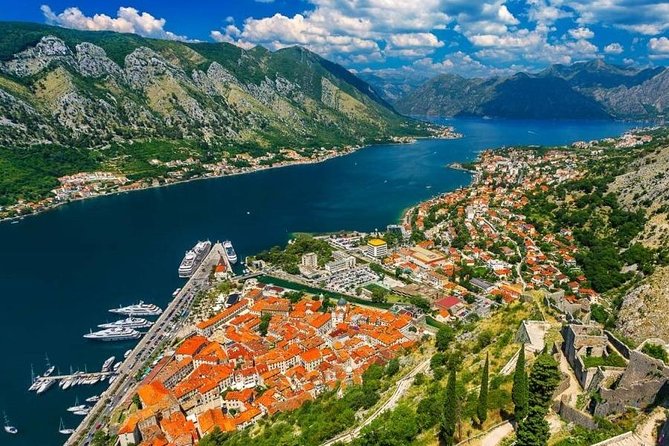
- Seven countries in nine days: Romania, Bulgaria, North Macedonia, Albania, Montenegro, Bosnia and Herzegovina, Serbia, and Hungary.
- A true one-way journey: You begin in Bucharest and finish at Budapest’s Keleti railway station.
- Major UNESCO sites: Rila Monastery, Ohrid, Kotor, and Mostar are central parts of the route.
- Mostly guided city walks: Local guides are included in Romania, Sofia, Skopje, Tirana, and Sarajevo.
- Long driving days: The vehicle connects many cities efficiently, but some stretches leave little time for rest.
- Listed price of $1,191.42 per person: Eight hotel nights, eight breakfasts, transport, and a tour leader are included, while meals, tips, and museum entries cost extra.
What the $1,191 price really covers
At $1,191.42 per person, the tour works out to about $132 per day before your extra spending. That is a reasonable package price for eight hotel nights, daily breakfast, cross-border transport, a professional tour leader, and guided visits in several capitals.
You are paying for convenience as much as sightseeing. Arranging this route alone would mean coordinating hotels in eight cities, border crossings, transfers, and transport between places that do not always connect easily. A single vehicle also lets you reach Rila Monastery, Ohrid, Mostar, and Novi Sad without building the trip around train schedules.
The price does not cover lunch, dinner, drinks, museum admission, or the suggested tip of €5 per day per person for the driver and tour guide. You should also budget for entrance fees at places where admission is not included. The exact list of hotel properties is not provided, and there is a small inconsistency in the description: one section says daily 3-star hotels, while the included services specify eight nights in 4-star hotels. I would confirm the hotel category before paying.
The overall rating shown is 4.6 from five ratings. That is encouraging, but it is still a small sample. One detailed account praised the tour leader’s attentiveness but raised serious concerns about a small, uncomfortable van, a damaged windshield, fast driving, hotel quality, and late departures. The operator does not identify the vehicle model, so I would ask about seating and luggage space in writing.
A few more trips worth weighing up before you book
- Bucharest: Dracula’s Castle, Peles Castle, & Brasov Old Town
★ 4.5 · 17,858 reviews - Bucharest: Dracula Castle, Peles Castle & Brasov Old Town
★ 4.6 · 10,891 reviews - Bucharest: Dracula’s Castle, Peleș Castle & Brașov Day Trip
★ 4.5 · 5,919 reviews
Day 1: Caves, waterfalls, and Lovech
The meeting information gives two start times, 8:00 am and 8:30 am, and two slightly different descriptions of the departure point. The stated meeting location is Bulevardul Regina Elisabeta 7, near University Square and the statues in central Bucharest. Confirm the exact time and curbside location before the morning begins.
The first stop is Devetashka Cave, a large karst cave near the village of Devetaki in Bulgaria. It is not the usual dark, narrow cave experience. Openings in the roof bring in daylight, and plants grow across parts of the floor. In spring and summer, the greenery can make the place feel more like a sunlit valley than an underground chamber.
You have about an hour here, with admission not included. Wear shoes suited to uneven ground, and do not expect a long exploration. This is a quick natural attraction that breaks up the first drive.
Next comes Krushuna Waterfalls, Bulgaria’s largest travertine cascade. Water runs over pale limestone terraces, forming small pools and several falls, with the main drop reaching about 20 meters. The setting is leafy and scenic, but the visit is also limited to roughly an hour. Admission is extra.
You then continue to Lovech, where the first overnight stay is scheduled. The day gives you two unusual natural stops before a night in a smaller Bulgarian town, which is a pleasant change from a chain of capital cities. The downside is that this opening day is road-heavy, and your arrival time in Lovech depends on traffic and the pace of the earlier stops.
Day 2: Lovech’s Covered Bridge and Sofia’s grand center
Lovech gets a short morning visit focused on its Covered Bridge over the Osam River. The bridge connects the two sides of town and is one of Lovech’s defining sights. You will have about an hour, so this is more of a pleasant introduction than a full town visit.
The afternoon drive continues to Sofia, Bulgaria’s capital. The walking tour centers on Alexander Nevsky Cathedral, with its gold-colored domes, along with Saint Sofia Church, the Banya Bashi Mosque, the Sofia Synagogue, and Vitosha Boulevard.
This compact route gives you a useful look at Sofia’s religious mix. Within a relatively small central area, Orthodox Christian, Muslim, and Jewish landmarks sit close together. That makes the walk more meaningful than a simple parade of buildings.
You have about three hours in Sofia, including the city walk. It is enough for orientation and photographs, but not enough for a thorough museum visit or a relaxed café afternoon. If Sofia interests you, note what you want to revisit during any free moments.
Day 3: Rila Monastery and an evening in Skopje
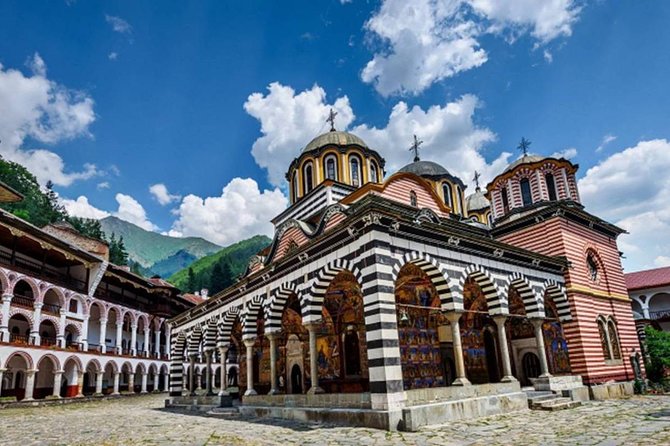
Rila Monastery is one of the strongest stops on the whole trip. Founded in the 10th century by Saint Ivan of Rila, it served as a major center of Bulgarian Orthodox life and culture for centuries. The monastery is also a UNESCO World Heritage Site.
The visit includes the church, decorated by 19th-century painters and woodcarvers from the Samokov, Bansko, and Debar schools. The courtyard, striped arches, and colorful religious art give the place a powerful visual identity. You get about an hour, so focus on the church and central courtyard rather than trying to see every corner.
The road then crosses into North Macedonia and continues to Skopje. An evening orientation walk introduces the capital before you settle into a centrally located hotel. The timing is practical because you get an initial look at the city before the fuller walk the next morning.
This is another long transit day. Keep your passport accessible, and expect border procedures to affect the schedule. A current valid passport is required for the tour.
A completely different kind of day out around Bucharest:
- Bucharest: Palace of Parliament Tickets and Guide
★ 4.3 · 3,182 reviews - Bucharest: Day Trip to Dracula Castle, Peles Castle & Brașov
★ 4.4 · 3,049 reviews - Bucharest to Dracula Castle, Peles Castle and Brasov Guided Tour
★ 4.5 · 2,933 reviews - Bucharest: Palace of Parliament Tickets and Guided Tour
★ 4.4 · 1,877 reviews
Day 4: Skopje’s old bazaar and Lake Ohrid
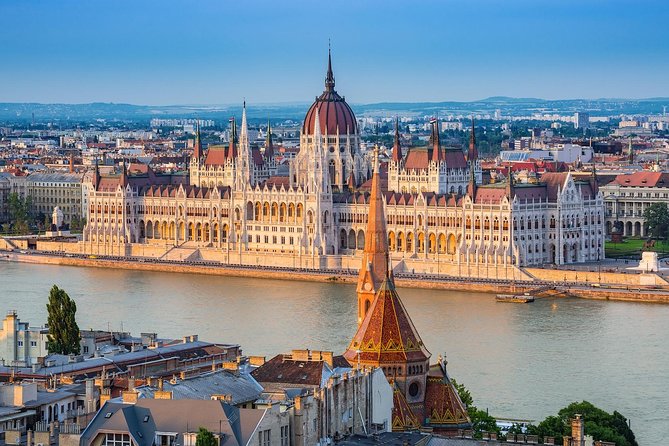
Skopje’s main walk covers the Vardar riverfront, the Old Bazaar, the Memorial House of Mother Teresa, Kale Fortress, and Macedonia Square. Skopje is a city of contrasts, with Ottoman-era streets, modern plazas, religious buildings, and monumental statues all within the central area.
The Old Bazaar is the most atmospheric part of the walk. Its narrow lanes provide a sharper sense of older Skopje than the open spaces around Macedonia Square. The city is also known as the birthplace of Mother Teresa, and her memorial house is one of the key stops.
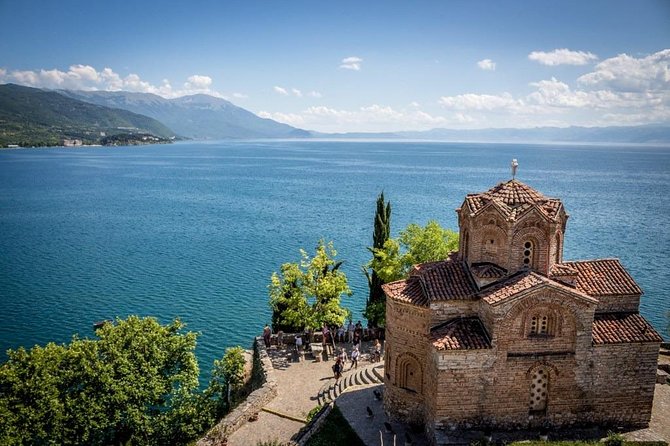
The route then heads to Ohrid, a UNESCO-listed town on Lake Ohrid near the Albanian border. The lake is more than three million years old, making it one of Europe’s oldest lakes. You will walk through the old center, pass the Ancient Theater, see old churches and basilicas including Saint Sofia Church, and visit the area around Tsar Samuil’s Fortress.
Ohrid is the kind of place where the setting matters as much as the monuments. Narrow lanes, lake views, old stone buildings, and religious sites give the afternoon a slower feel, even though the schedule remains tight. You have about three hours, which is enough for a guided introduction but not enough to explore the lake shore at leisure.
Day 5: Tirana and a new national character
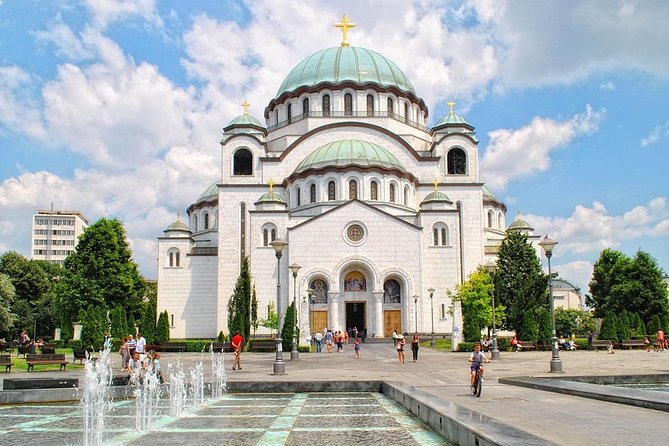
The route crosses from North Macedonia into Albania and continues to Tirana. The capital’s walk includes Skanderbeg Square, the National History Museum, Et’hem Bey Mosque, and the statue of Skanderbeg.
Tirana offers a clear change in mood and architecture from Skopje and Ohrid. The central square is broad and formal, while the mosque and museum provide a quick introduction to Albania’s national story and religious past.
The listed visit lasts around three hours. Museum admission is not included, so check with the tour leader about available time before buying a ticket. Since Tirana receives only one scheduled stop, you should treat this as a capital-city overview rather than a full exploration.
This day is shorter on named attractions than some others, which may be welcome after the packed Skopje and Ohrid schedule. It also gives you a chance to handle practical matters such as laundry, snacks, and charging devices before the next stretch through Montenegro and Bosnia and Herzegovina.
Day 6: Kotor’s fortified old town
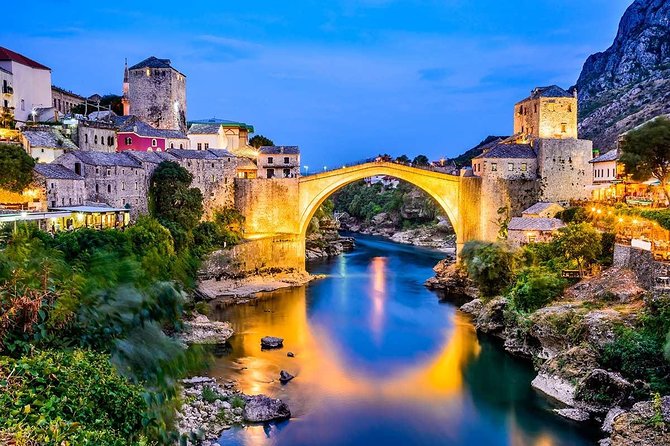
Kotor arrives in the evening, with about three hours devoted to Stari Grad, the fortified old town. Kotor is a UNESCO World Heritage Site, and its appeal comes from the tight medieval street plan, stone buildings, defensive walls, and dramatic mountain setting around the bay.
An evening arrival can work well here. The old town is compact, so a guided walk can cover the main lanes and squares without a great deal of transport inside the city. You will likely have time to enjoy the atmosphere after the formal walk, but the schedule does not promise a full day in the bay area.
This is an important limitation. The tour gives you Kotor itself, not a broad Montenegro program. If you want a boat ride, a longer wall walk, or more time around the bay, you may need a separate trip.
Day 7: Mostar, the Neretva canyon, and Sarajevo
The journey to Mostar follows a scenic road beside Jablanica Lake and through the Neretva River canyon. This is one of the more attractive driving sections, but it also adds to the amount of time spent in the vehicle.
Mostar’s old town centers on the Old Bridge, built in 1566 and destroyed during the Siege of Mostar in 1993. The guided walk addresses the bridge’s destruction, the conflict surrounding it, and its later reconstruction. That context matters. Without it, the bridge can look like a beautiful photo stop. With it, the site becomes a direct lesson in how war reshaped a city.
A long-running local tradition involves young men jumping from the bridge for money from onlookers. You may see this if conditions and participants allow, but it is not presented as a guaranteed part of the tour.
After Mostar, you continue to Sarajevo for a three-hour walking tour. The route covers the Ottoman and Austro-Hungarian sections, markets, mosques, churches, synagogues, the Latin Bridge, and the story of the 1914 assassination that helped trigger the First World War. The guide also covers Sarajevo’s 1984 Winter Olympics and daily life during the Siege of Sarajevo.
This is one of the most valuable guided days because Sarajevo’s story is layered and difficult to absorb from a map alone. Still, the combined Mostar and Sarajevo program is intense. You will see the key areas, but you will not have much unstructured time.
Day 8: Belgrade from Republic Square to Kalemegdan
The Serbian capital comes next. The city walk includes Republic Square, the National Theatre, the National Museum, Skadarlija, Kalemegdan Park, Belgrade Fortress, and the confluence of the Sava and Danube rivers.
Skadarlija is described as Belgrade’s oldest quarter, with Ottoman heritage and a traditional bohemian identity. Kalemegdan then shifts the focus to the fortress and the rivers. The Victor monument is one of the city’s best-known symbols and provides a strong viewpoint over the meeting of the Sava and Danube.
The mosque listed in the route is the only mosque in Belgrade. Together, these stops give you a broad orientation to the city’s changing empires, cultural life, and riverfront geography.
You have roughly three hours for Belgrade. That is enough to see the central highlights with a guide, but the National Museum and National Theatre are primarily exterior or orientation stops unless the schedule allows entry. Museum fees are not included.
Day 9: Novi Sad before Budapest
The last morning brings a stop in Novi Sad. The walk includes Zmaj Jovina Street, the promenade, the Orthodox Bishop’s Palace, Dunavska Street, the Danube embankment, and an outside view of Petrovaradin Fortress across the river.
Novi Sad is a welcome final pause because it feels less hurried than a capital-city checklist. Zmaj Jovina and Dunavska streets feature older low-rise buildings, while the riverfront and fortress provide a broader sense of the city.
The visit lasts about an hour, so you will get a quick introduction rather than a complete tour of Novi Sad or Petrovaradin Fortress. From there, the vehicle continues to Budapest, arriving in the evening at Keleti railway station on Kerepesi út.
Ending in Budapest is practical. You can continue by train, stay in the city, or use it as the next base for Hungary. The route finishes at a major transport point rather than returning you to Bucharest, which is one of the tour’s best time-saving features.
Transport, walking, and group size
The vehicle is described as climate-controlled and used throughout the tour. That is essential on a route with frequent national borders and several remote sights. However, the group may reach 46 people, and the vehicle type is not specified.
One detailed account describes a small van with uncomfortable seats, no captain-style seats, a damaged front windshield, and fast driving. Those are not minor complaints, especially on a trip with long road hours. Ask before booking whether the vehicle has enough legroom, working safety equipment, and space for each person’s luggage.
The walking is described as easy to moderate, but the total mileage can add up. Individual walks range from about 1 to 7 kilometers, and some last two to five hours. Sofia is given as about 4 kilometers in 1.5 hours, while Skopje is about 3 kilometers in the same time.
You should be comfortable walking on old stone streets, standing during guided visits, and carrying your own bag up some hotel steps. Most hotels are said to have elevators, but the tour is not designed for people who need minimal walking.
Who should book this Balkan sampler
I would choose this tour if you want a fast introduction to southeastern Europe and prefer having transport and hotels arranged. It suits an active first-time visitor who values coverage over long stays and wants local guides in key cities.
I would hesitate if you prefer slow mornings, independent meals, museum time, or several nights in each destination. The route is ambitious, and the number of countries comes with a cost: many places receive only a few hours.
The cancellation terms are strict close to departure. A full refund is available if you cancel at least six full days before the start, while cancellations two to six days ahead receive 50 percent. Cancellations less than two full days before departure are not refunded. The tour also requires a minimum number of participants, and the operator may offer another date or a full refund if that minimum is not met.
Should you book this tour?
Book it if the idea of crossing the Balkans in one continuous trip excites you more than the thought of lingering in one city. The strongest elements are the route, Rila Monastery, Ohrid, Kotor, Mostar, Sarajevo, and the one-way finish in Budapest.
Before paying, confirm three things: the exact departure time, the promised hotel category, and the vehicle’s seating and safety condition. If those answers are satisfactory, the price offers a practical way to cover a difficult region in nine days. If comfort and free time matter most, build a slower custom trip instead.
Just added around Bucharest
- 10 hours Private Apiary Tour in Romania – From Bucharest★ 5.0 · 3 reviews
- 4-Day Inside Transylvania & Transfagarasan Tour from Bucharest★ 5.0 · 3 reviews
- Bucharest: Charm of the Belle Époque Private Tour★ 5.0 · 3 reviews
- Bran & Peles Castles through the Best Road in the World: Transfagarasan road★ 4.5 · 3 reviews
- Private Wine Tasting at Bucharest’s First Wine Bar★ 5.0 · 3 reviews
- 2-Day Small-Group Tour in Transylvania from Bucharest – Maximum 5 Persons★ 5.0 · 3 reviews
- Probably the Best Restaurant and Wine Cellar near Bucharest★ 4.5 · 3 reviews
- Bucharest to Brasov – Fast Private Transfer★ 5.0 · 3 reviews
Tours, compared.
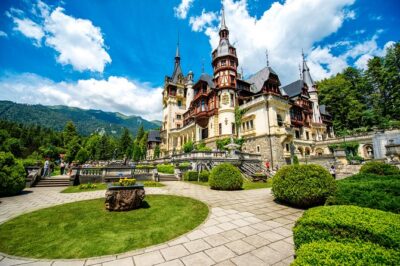
Bucharest to Dracula Castle, Peles Castle and Brasov Guided Tour
Read our review →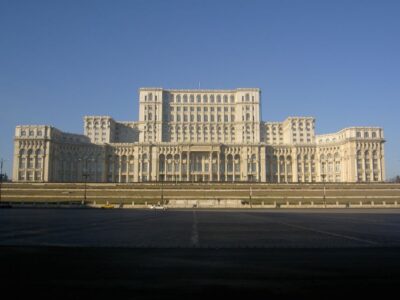
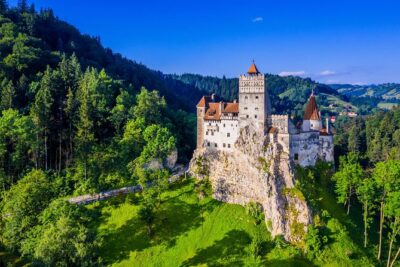
Transylvania and Dracula Castle Full Day Tour from Bucharest
Read our review →
Peles Castle, Bran Castle, & Brasov Old Town Tour
Read our review →
Small-group tour Bran, Rasnov, and Peles Castles
Read our review →