
Reviewed · 2-DAY EXPERIENCES
2 Days Private Tour – The Romanian Caves from Bucharest
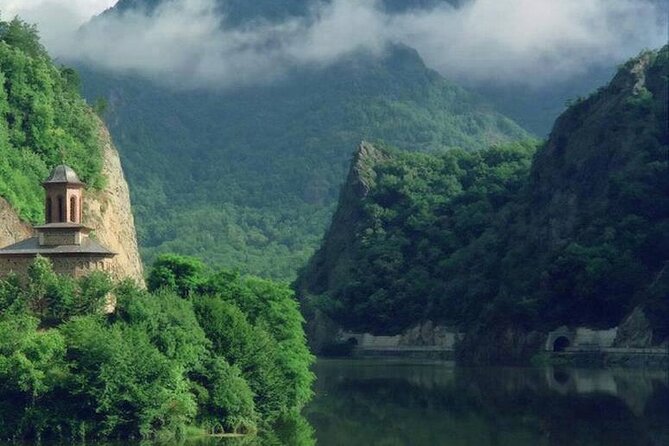
Romania keeps its best stories underground. This private two-day trip links three striking caves with Horezu and Polovragi monasteries, then finishes among Constantin Brâncuși’s famous sculptures in Târgu Jiu. I like the private car and flexible schedule, and I like having guide-driver Nicolas handle the long rural routes while explaining the places along the way.
The main drawback is the amount of driving packed into two days. The cave visits are unhurried enough to enjoy, but this is still a busy route from Bucharest. Also, the published details are unclear about whether your accommodation, meals, and entrance fees are included, so I would confirm those points before paying the $744.18 per-person price.
In This Review
- Key points at a glance
- Why this route works from Bucharest
- Horezu Monastery and the craft of southern Romania
- Polovragi Cave: names, legends, and limestone formations
- Polovragi Monastery and a 500-year-old setting
- The Women’s Cave and Romania’s oldest traces
- Târgu Jiu and Brâncuși’s four quiet monuments
- What Nicolas adds to the tour
- Transport, timing, and the real workload
- Who should book this private cave tour?
- Should you book the Romanian caves tour?
- FAQ
- Where does the tour begin and end?
- How long does the experience last?
- Is this a private tour?
- Who leads the tour?
- Which caves are visited?
- Which monasteries are included?
- Are entrance fees included?
- Are accommodation and meals included?
- Can the itinerary be changed?
Key points at a glance

- Polovragi Cave opens a window onto Romania’s underground world: Only about 800 meters of its galleries are open, although the cave extends for more than 10 kilometers.
- Horezu Monastery brings art and faith together: Its Orthodox architecture and famous Horezu ceramics make this more than a quick photo stop.
- The Women’s Cave adds human drama: The cave’s name is tied to women and children hiding there during periods of conflict, and the site includes evidence linked to civilizations more than 30,000 years old.
- Brâncuși’s four-part sculpture route gives Day 2 a strong finish: The Table of Silence, Chairs Alley, Gate of the Kiss, and Infinity Column are spread along a 1,275-meter axis.
- Nicolas is a major part of the experience: His warm manner, humor, punctuality, country knowledge, and ability to adjust explanations for different ages are repeatedly praised.
- The private format has real value for small groups: You travel only with your own family or friends, with Wi-Fi, fuel, parking, and road tolls handled for you.
Why this route works from Bucharest
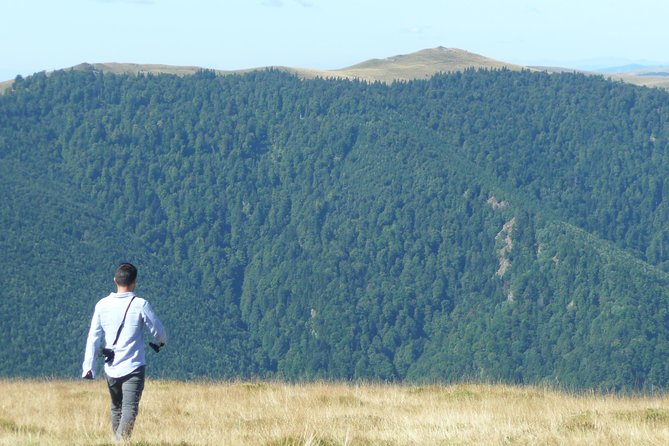
Bucharest is a useful base for Romania, but the country’s caves and mountain monasteries are not simple city excursions. Distances are long, public transport options are limited in rural areas, and some sites are much easier to visit with someone who already knows the roads.
This tour solves that problem with a private tourism car or minibus. Hotel pickup and drop-off are included, and the guide-driver remains with your group throughout the trip. That matters here because the route is not built around one compact town. It connects Horezu, Polovragi, the Women’s Cave, and Târgu Jiu.
I also like the stated flexibility. You can request changes to the daily plan, even after the tour begins. That does not erase the distances, but it gives your group more control than a fixed coach excursion.
The price is $744.18 per person. That is a serious amount, especially for a solo visitor, but the value improves when several people share the private vehicle and guide. You are paying for transport over two days, a licensed English-speaking guide, fuel, parking, tolls, wireless internet, and the freedom to travel with only your own group.
The accommodation and meal information needs careful attention. The highlights describe accommodation and meals as part of the package, while the detailed inclusion notes say accommodation, meals, and beverages are not included, though the company can recommend and book them. Entrance fees are also described both as included and not included in different sections. Get a written breakdown before booking so there are no surprises.
A few more trips worth weighing up before you book
- 2-Day Medieval Transylvania with Brasov,Sibiu and Sighisoara Tour from Bucharest
★ 4.5 · 145 reviews - 2-Day Transylvania from Bucharest: Brasov, Bran, Sighisoara
★ 5.0 · 60 reviews - 2-Day Private Tour of Transylvania from Bucharest
★ 5.0 · 24 reviews
Horezu Monastery and the craft of southern Romania
The first stop is Horezu Monastery, also called Hurezi Monastery. You get about one hour here, which should allow time to look at the buildings, religious artwork, and setting without reducing the visit to a rushed stop.
Horezu is recognized as a UNESCO World Heritage site and is presented as one of Romania’s finest Orthodox monasteries. Its importance is not only religious. The complex is closely tied to Romanian architectural traditions and to Horezu ceramics, one of the country’s best-known folk arts.
I would pay attention to the details rather than simply taking a few photographs. Look at the painted surfaces, the repeated patterns, and the way the complex reflects local building traditions. Your guide can give the site more meaning by explaining its place in Romanian culture and spiritual life.
The description also connects this part of the journey with gorges, mountain walls, and stone caves. That makes Horezu a good opening stop because it introduces both sides of the tour: human-made monuments and natural sites shaped by rock and water.
One hour is enough for a first look, but it is not an extensive monastery study. If religious art is your main interest, you may want to ask Nicolas in advance how much time can be given to the interiors and artwork.
Polovragi Cave: names, legends, and limestone formations
Polovragi Cave receives two hours, making it the longest stop on the first day. That is sensible. Caves require time to enter, walk through, listen to explanations, and adjust to the darker, warmer setting.
The cave is warm and humid, with limestone formations spread through galleries extending more than 10 kilometers. Only around 800 meters are open to the public. You will not explore the full cave system, but the accessible section still provides a substantial underground visit.
The cave’s named formations add a playful thread to the experience. Depending on what you are shown, you may hear about the Spring of Hope, Bloody Vault, White Room, Divine Chamber, Grim Reaper, Dacian Oven, King and Queen, Snow White, and the Dwarfs’ House.
Some of these names are fanciful, while others carry a darker or more spiritual mood. That mix is part of the charm of cave touring. Rock shapes become characters, rooms, and stories, and a good guide helps you see why each name was chosen.
The practical issue is comfort. The cave is described as humid, so bring clothing that feels comfortable in damp conditions. You should also expect uneven natural surroundings rather than a polished museum environment. The supplied information does not specify accessibility details, so ask the operator if anyone in your group has mobility concerns.
Two hours gives you room to enjoy the visit, but this is not a technical caving expedition. You visit the section prepared for public access, with the guide organizing the experience and admission arrangements.
Polovragi Monastery and a 500-year-old setting
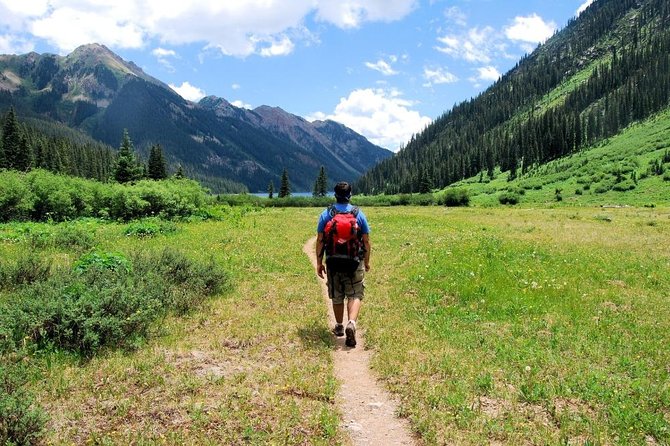
After the cave, you spend about 30 minutes at Polovragi Monastery. The shorter visit makes sense as a compact introduction to a historic religious monument rather than a full afternoon of study.
The monastery dates back roughly 500 years and is valued for its cultural and spiritual importance. Its artwork and evidence of long-term settlement connect the site to ideas of endurance, faith, and continuity.
This stop also balances the mood of Polovragi Cave. Underground, the atmosphere is damp, dark, and mysterious. At the monastery, the focus shifts to painted religious art, architecture, and human devotion. Taken together, the two stops show how Romanian identity is expressed through both nature and belief.
Thirty minutes can pass quickly. If you want time to examine the artwork closely, ask your guide to point out the most important details at the start of the visit. Nicolas is known for adjusting his explanations to different ages, which should help families and mixed-interest groups get more from a short stop.
A completely different kind of day out around Bucharest:
- Bucharest: Dracula’s Castle, Peles Castle, & Brasov Old Town
★ 4.5 · 17,858 reviews - Bucharest: Dracula Castle, Peles Castle & Brasov Old Town
★ 4.6 · 10,891 reviews - Bucharest: Dracula’s Castle, Peleș Castle & Brașov Day Trip
★ 4.5 · 5,919 reviews - Bucharest: Palace of Parliament Tickets and Guide
★ 4.3 · 3,182 reviews
The Women’s Cave and Romania’s oldest traces
Day 2 begins at the Women’s Cave, or Peștera Muierii. You have two hours here, giving this site enough time to make an impression rather than feeling like another quick stop on a packed route.
The name comes from a difficult period in Romanian history. During conflict, women and children are said to have used caves like this for protection while men relied on guerrilla tactics. The story gives the cave a strong human connection. You are not looking only at mineral shapes and underground chambers. You are also considering how ordinary families used the natural world to survive.
The cave is associated with evidence of civilizations more than 30,000 years old. It also includes a giant animal graveyard, one of the more unusual details on this itinerary. That combination gives the visit several layers: geology, early human presence, and prehistoric animal remains.
I would allow yourself time to absorb the atmosphere here. A cave can feel impressive because of its size, but the Women’s Cave is more interesting when you connect the physical site with the people and animals linked to it.
As with Polovragi Cave, the provided information does not describe every practical condition inside. You should ask about walking surfaces, stairs, temperature, and access before booking if those details matter to you. Most participants can take part, but the operator does not provide a detailed accessibility statement.
Târgu Jiu and Brâncuși’s four quiet monuments
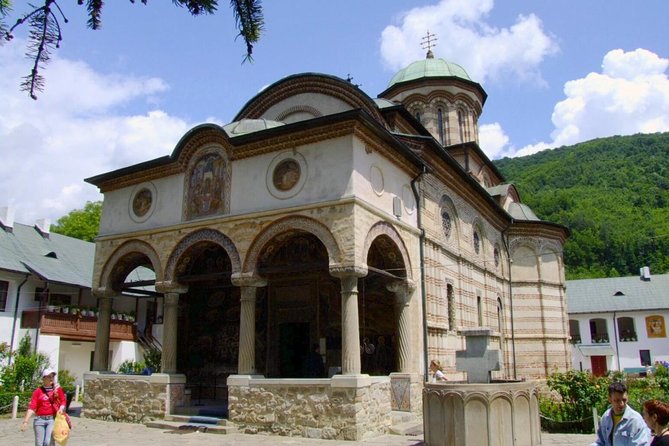
After the caves, the route changes direction completely. In Târgu Jiu, you visit Constantin Brâncuși’s Sculptural Ensemble, also called the Calea Eroilor, or Heroes Way.
The ensemble consists of four works arranged along a 1,275-meter axis:
- The Table of Silence
- Chairs Alley
- The Gate of the Kiss
- The Infinity Column
The arrangement is important. These are not four unrelated objects placed in a gallery. You move through a designed sequence, with the sculptures forming a memorial route and a symbolic statement about the Romanian spirit.
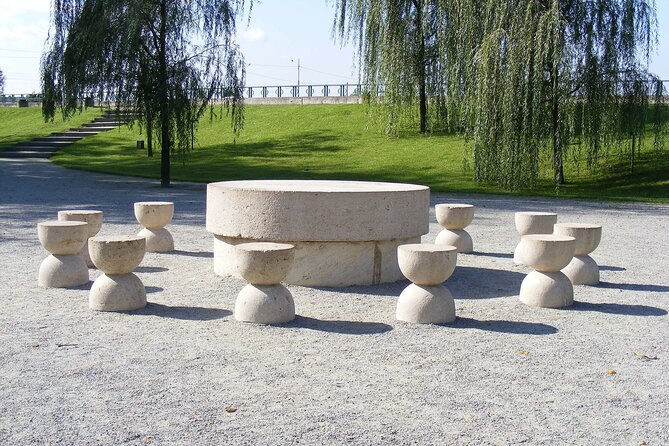
The Table of Silence receives about 30 minutes. Its simple form invites quiet attention rather than a long lecture. You may find that the work changes as you walk around it and view the relationship between the table and the surrounding public space.
Chairs Alley also belongs to the same route, even though it is not listed as a separate timed stop. Keep it in mind as you walk between the named sculptures. It helps connect the Table of Silence with the Gate of the Kiss.
The Gate of the Kiss also receives about 30 minutes. Its paired forms and repeated design show Brâncuși’s ability to reduce a familiar idea to a strong, spare shape. You do not need a background in modern art to appreciate it, but a few clear comments from Nicolas can help you notice why the work matters.
The Infinity Column gets one hour, the longest allocation among the sculptures. That extra time is useful because the column is best understood from several viewpoints. Its repeating forms create a strong upward rhythm, and the simplicity is deceptive. The work looks plain at first, but its scale and repetition give it force.
There is no admission charge for these sculpture stops. The route also gives Day 2 a different pace. After the enclosed caves, you have open public spaces, monumental forms, and a chance to walk.
What Nicolas adds to the tour
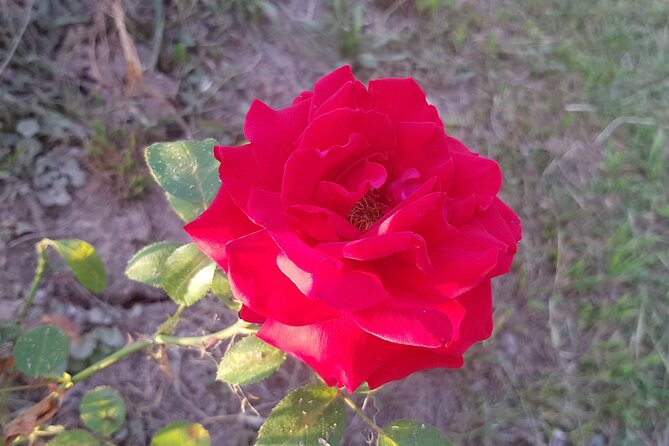
The guide-driver can make or break a route like this. Nicolas is the named guide associated with the experience, and the available feedback points to several qualities that matter in practice.
He is praised for explaining Romanian history clearly, keeping good time, and knowing which places are worth visiting. His humor and friendly manner also receive strong emphasis. One account describes a new car and excellent service, while another notes that he adapts the content for all age groups.
Those details are useful because this is not a tour where the guide simply drops you at a site. Nicolas is available throughout the trip, and the private structure means you can ask questions without a bus full of strangers waiting.
The best fit is a family, couple, or group of friends who values conversation and flexibility. If you prefer to explore every site alone and read your own guidebook, a private tour may feel more structured than necessary. If you want someone else to manage the route and explain what you are seeing, the format has a clear advantage.
Transport, timing, and the real workload
The tour lasts approximately two days and includes hotel pickup and drop-off. You travel by private car or minibus, with only your own party in the vehicle. Wi-Fi is offered in the car, and gasoline, parking, and road tolls are covered.
Those inclusions remove several small costs and decisions. You do not need to work out rural connections, negotiate parking, or keep checking the road map. You can focus on the caves and monasteries instead of transport details.
Still, do not mistake private transport for a slow-paced holiday. The itinerary covers several separated locations, and the route from Bucharest involves substantial road time. The cave visits and sculpture stops are well defined, but the day will feel active.
The flexible itinerary helps. You may be able to adjust the order or timing after the trip begins, subject to what is practical. Discuss your priorities early. For example, you might care more about cave time than monastery interiors, or you may want longer at the Brâncuși ensemble.
Who should book this private cave tour?
I would recommend it most strongly to people who have two days available and want to see parts of Romania that are difficult to arrange independently. It suits:
- Small groups who can share the per-person cost
- Families who want a private vehicle and age-appropriate explanations
- Visitors interested in caves, Orthodox art, folk ceramics, and sculpture
- People who prefer a guide to manage rural transport
- Anyone who wants flexibility instead of a fixed large-group schedule
I would think twice if you dislike long drives, damp cave conditions, or a full sightseeing program. This is also not the clearest choice for a solo visitor on a tight budget.
The cancellation policy is generous if your plans are uncertain. You can receive a full refund when canceling at least 24 hours before the start time. The tour requires good weather, and poor conditions may lead to a different date or a full refund.
Should you book the Romanian caves tour?
Book this tour if you want a private, guided route through caves, monasteries, and Brâncuși’s monuments, and if you value having a local driver manage the hard parts. The combination is unusual: Polovragi Cave and the Women’s Cave provide the natural drama, Horezu and Polovragi add religious art and tradition, and Târgu Jiu supplies a thoughtful modern finish.
I would make one call before booking. Confirm exactly what the $744.18 price covers for your group, especially your own hotel, meals, drinks, and entrance fees. Once that is clear, this looks like a strong choice for a small group that wants Romania beyond Bucharest without planning every rural connection alone.
FAQ
Where does the tour begin and end?
The tour begins with hotel pickup in Bucharest and includes hotel drop-off.
How long does the experience last?
The experience lasts approximately two days.
Is this a private tour?
Yes. Only your own group participates, traveling in a private car or minibus.
Who leads the tour?
A licensed English-speaking guide-driver leads the experience. Nicolas is the guide-driver named in the available information.
Which caves are visited?
The route includes Polovragi Cave and the Women’s Cave, also called Peștera Muierii.
Which monasteries are included?
You visit Horezu Monastery, also called Hurezi Monastery, and Polovragi Monastery.
Are entrance fees included?
The provided details conflict. Some sections say entrance fees are included, while another section lists entrance fees as not included. Confirm this before booking.
Are accommodation and meals included?
The provided details also conflict on this point. Accommodation and meals are described as included in one section, while another says they are not included but can be recommended and booked. Ask for clarification before payment.
Can the itinerary be changed?
The tour offers flexibility for changes to the daily itinerary, including changes after the tour has started. The exact changes will depend on what is practical during the trip.
Just added around Bucharest
- 10 hours Private Apiary Tour in Romania – From Bucharest★ 5.0 · 3 reviews
- 4-Day Inside Transylvania & Transfagarasan Tour from Bucharest★ 5.0 · 3 reviews
- Bucharest: Charm of the Belle Époque Private Tour★ 5.0 · 3 reviews
- Bran & Peles Castles through the Best Road in the World: Transfagarasan road★ 4.5 · 3 reviews
- 2-Day Small-Group Tour in Transylvania from Bucharest – Maximum 5 Persons★ 5.0 · 3 reviews
- Private Wine Tasting at Bucharest’s First Wine Bar★ 5.0 · 3 reviews
- Bucharest to Brasov – Fast Private Transfer★ 5.0 · 3 reviews
- Probably the Best Restaurant and Wine Cellar near Bucharest★ 4.5 · 3 reviews
2-Day Experiences, compared.
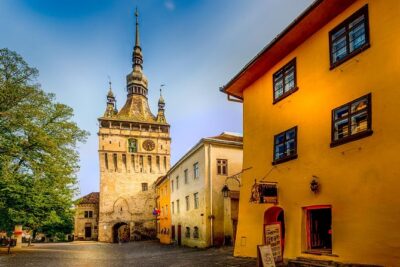
2-Day Medieval Transylvania with Brasov,Sibiu and Sighisoara Tour from Bucharest
Read our review →
2-Day Transylvania from Bucharest: Brasov, Bran, Sighisoara
Read our review →
2-Day Private Tour of Transylvania from Bucharest
Read our review →
2 Days Private Tour in Transylvania from Bucharest – 4 Medieval Cities
Read our review →
2 Days – Private Tour to Transylvania – Brașov, Sighișoara, Sibiu
Read our review →
2 Days Private Tour Transfagarasan Road & Sibiu from Bucharest
Read our review →Browse the lists this tour appears in