Reviewed · PRIVATE
10-Day Private Tour of Romania with Pick Up
Romania rewards the curious. This 10-day private tour links Bucharest, Transylvania, Maramures, Bukovina, and the Carpathians in one ambitious route, with a private car and English-speaking guide-driver throughout. I especially like the freedom to adjust the daily plan and the chance to reach places that are awkward by public transport, from Poienari Fortress to Sarmizegetusa Regia. The main tradeoff is pace: several days involve long drives, and entrance fees, hotels, food, and drinks are extra.
I also like that the route goes beyond Dracula postcards. You get communist-era history, painted monasteries, wooden churches, Dacian ruins, local museums, and small villages with strong regional character. Guide-driver Nicolas receives warm praise for his company and knowledge of Romania, but the price of $3,918.13 per person means this works best for people who value privacy and convenience more than a low-cost trip.
In This Review
- Key points at a glance
- Why this route works for Romania
- Bucharest begins with power and protest
- From Curtea de Arges to Sibiu by mountain road
- Castles, ancient Dacians, and a salt mine
- Maramures tells stories with color and humor
- Bukovina’s painted monasteries
- Folk art and the Bicaz Gorges
- Sighisoara, Biertan, and the final castle day
- What the $3,918.13 price buys you
- Who should book this private Romania tour
- FAQ
- Where does the tour start?
- How long does the experience last?
- Is this a private tour?
- Is an English-speaking guide included?
- Is transportation included?
- Are hotels included?
- Are meals included?
- Are entrance fees included?
- When is the Transfagarasan Highway fully open?
- Can the itinerary be changed?
- What is the cancellation policy?
- Should you book it?
Key points at a glance
- A private route across much of Romania: Bucharest, Wallachia, Transylvania, Maramures, Bukovina, Moldavia, and the Carpathians all appear in the plan.
- Nicolas is the guide-driver to look for: His friendly manner and knowledge are singled out in the available feedback.
- The Transfagarasan is seasonal: The road reaches 2,042 meters and is fully open only from June through October.
- The trip is built around variety: Expect palaces, castles, salt mines, monasteries, folk museums, communist memorials, and mountain passes.
- You pay extra for most admissions: Hotels, meals, drinks, and entrance tickets are not included, so budget beyond the headline price.
- Small-group privacy changes the experience: The vehicle is reserved for your own family or friends, with itinerary changes possible during the tour.
Why this route works for Romania
Romania is not a country you understand from one city or one castle. Its story runs from Dacian fortresses and Roman remains to medieval Saxon towns, Orthodox monasteries, royal palaces, and the hard memories of communism.
This tour gives each period room to breathe. Bucharest provides the political context. Transylvania supplies fortresses and old citadels. Maramures brings wooden architecture and village traditions. Bukovina offers painted monasteries, while the Carpathians provide the long mountain roads that tie the country together.
The route is broad rather than relaxed. You will cover a great deal of ground in ten days, and some sightseeing blocks last only 45 minutes. That is enough for a first look, but not always enough for a slow museum visit or an unhurried village walk.
The private format helps. Your guide-driver can make changes after the tour begins, and the vehicle is used only by your group. That matters on a route where weather, road conditions, opening times, and personal interests can affect the day.
A few more trips worth weighing up before you book
- Bucharest: Dracula’s Castle, Peles Castle, & Brasov Old Town
★ 4.5 · 17,858 reviews - Bucharest: Dracula Castle, Peles Castle & Brasov Old Town
★ 4.6 · 10,891 reviews - Bucharest: Dracula’s Castle, Peleș Castle & Brașov Day Trip
★ 4.5 · 5,919 reviews
Bucharest begins with power and protest
The first day is a strong introduction to modern Romania. At the Palace of Parliament, you confront the scale of Nicolae Ceausescu’s communist building project. It is the world’s second-largest administrative building after the Pentagon, and its sheer size makes a useful point: political power can turn into expensive, impractical spectacle.
The visit lasts about two hours, but admission is not included. Ask your guide about the ticket arrangements before you arrive, since this is one of the main sights of the day.
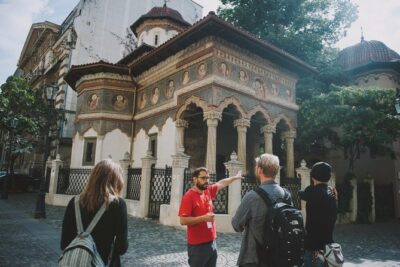
The National Village Museum offers a needed change of tone. Instead of monumental concrete, you see traditional rural buildings and learn how Romanian villagers organized daily life around local materials, work, family, and faith. One hour is a quick visit, but it gives you a visual introduction to the customs that appear again later in Maramures and Bukovina.
At the Romanian Athenaeum, allow about 45 minutes. This elegant cultural building is one of Bucharest’s best-known symbols and appears on the European Heritage list. The stop is more about architecture and national identity than a long indoor tour.
Revolution Square adds the political thread. You see the former Central Committee building, linked to the December 1989 uprising that removed Ceausescu from power. The tour description places emphasis on the human cost of that change and on the controversies surrounding the communist security service and Ceausescu’s wealth.
The Old Town closes the day with a more social atmosphere. Hanul lui Manuc, built around 1806 by Manuc Bei, recalls Bucharest’s role as a merchant crossroads. The historic center also offers old churches, museums, restaurants, and places to browse for books, music, or souvenirs. Two hours gives you time to get a feel for the district, though food and drinks are your responsibility.
From Curtea de Arges to Sibiu by mountain road
Day two moves into Wallachia and then across the mountains. Curtea de Arges combines princely ruins, a 13th-century Royal Church, and the famous monastery, whose royal tombs give the town special importance.
Poienari Fortress is a very different kind of castle from Bran. These are ruins high above the Arges River, linked to Vlad the Impaler and his effort to strengthen the site. The visit is scheduled for two hours, so this is one of the stops where you should expect a more physical outing rather than a polished palace interior.
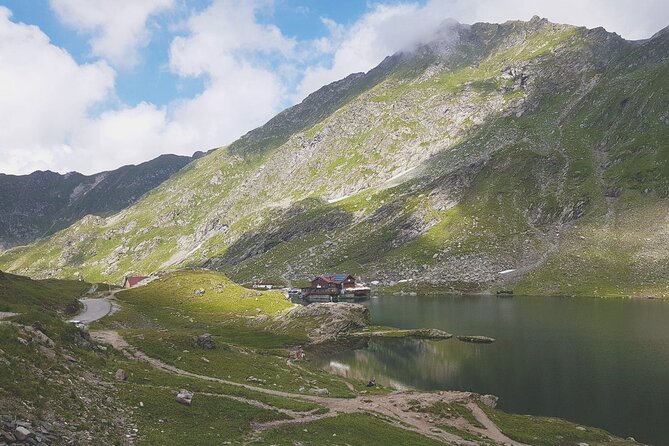
The Transfagarasan Highway is the day’s great visual prize. The road runs for more than 150 kilometers, climbs to 2,042 meters, and crosses the mountains near Lake Balea. Its full route is open only from June through October, so the season matters greatly. If you book outside that period, ask exactly which portion can be visited.
The day ends in Sibiu’s Big Square. Sibiu’s old center, Evangelical Cathedral, streets, and surrounding mountain views make it one of Romania’s most rewarding city stops. One hour is enough for an orientation walk, but you may want to request extra free time if cafes, architecture, and town squares are your priority.
Castles, ancient Dacians, and a salt mine
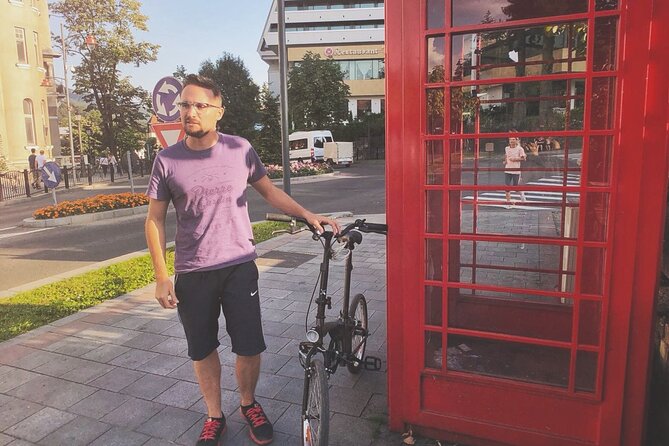
Day three is devoted to western Transylvania. Corvin Castle in Hunedoara is a dramatic Gothic-Renaissance fortress and one of the largest castles in Europe. Its two-hour visit gives you time to appreciate the towers, walls, and medieval atmosphere without treating it as a quick photo stop.
Densus Church is smaller but unusual. Its present form dates to the 13th century, and it was built on the site of a second-century Roman temple using materials connected with the Dacian fortress of Sarmizegetusa. Inside, 15th-century murals show Jesus wearing Romanian traditional clothing. The one-hour visit rewards close attention to details that are easy to miss from the road.
Sarmizegetusa Regia requires three hours, making it one of the more substantial historical stops. This was the Dacian capital and a major military, religious, and political center before the wars with Rome. The fortress was built on a mountain at about 1,200 meters and formed part of a wider defensive system.
Day four shifts from ancient ruins to industrial heritage at Salina Turda. The salt mine is one of the most unusual places in Transylvania, with underground chambers shaped by salt extraction. The saline air is also described as beneficial for people with allergies or asthma, though you should treat that as a feature of the environment, not a medical promise.
Cluj-Napoca follows with the Alexandru Borza Botanical Garden and an hour of city sightseeing. The old center includes Baroque, Renaissance, and Gothic buildings, some dating to the 17th century. Local food is part of Cluj’s appeal, but meals are not included and the schedule may limit how long you can linger.
The day ends at Surdesti Wooden Church. Its tower reaches 54 meters, while the church is described as 72 meters high in total. Built in 1721, it shows what skilled wooden construction could achieve long before modern equipment.
A completely different kind of day out around Bucharest:
- Bucharest: Palace of Parliament Tickets and Guide
★ 4.3 · 3,182 reviews - Bucharest: Day Trip to Dracula Castle, Peles Castle & Brașov
★ 4.4 · 3,049 reviews - Bucharest to Dracula Castle, Peles Castle and Brasov Guided Tour
★ 4.5 · 2,933 reviews - Bucharest: Palace of Parliament Tickets and Guided Tour
★ 4.4 · 1,877 reviews
Maramures tells stories with color and humor
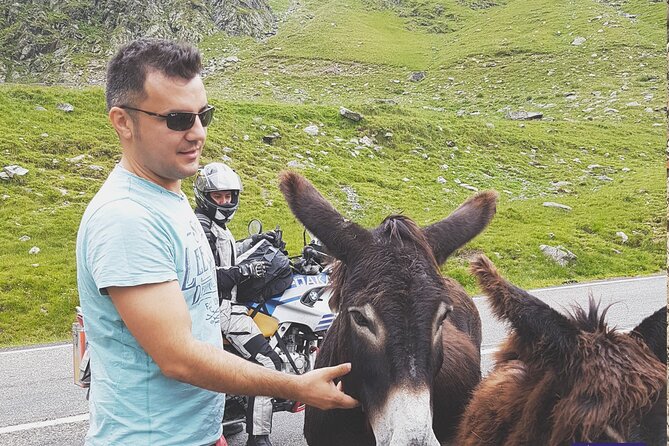
Merry Cemetery in Sapanta is one of Romania’s most distinctive cultural stops. Brightly painted crosses carry humorous poems about the people buried there. The tone is unusual, even startling, if you expect a cemetery to be solemn and quiet. It reflects a local way of facing death with wit, personality, and storytelling.
Give the site its full hour. The inscriptions are central to the experience, so moving too quickly would defeat the purpose.
The Memorial of the Victims of Communism and of the Resistance provides a sober counterpoint. Two hours here help explain the fear, punishment, and suffering caused by Romania’s totalitarian period. After the grand scale of the Palace of Parliament, this museum brings the subject back to individual lives.
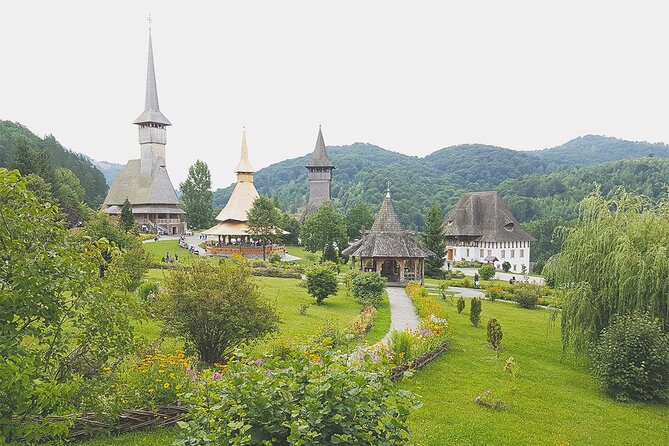
Day six returns to Maramures with Barsana Monastery. Its wooden church reaches about 57 meters and sits in a setting designed to feel peaceful and spiritual. The 45-minute stop is short, but the monastery’s woodwork and tall structures make it worth including.
Tihuta Pass connects Transylvania with Bukovina through the Bargaului Mountains. Its link with Bram Stoker’s Dracula novel comes from the fictional Borgo Pass, although Stoker never visited Romania. The Hotel Castel Dracula, built in 1976 and given its current name after 1989, adds a modern layer to the literary connection.
Ciocanesti offers another regional contrast. Houses in the village are painted with traditional motifs, and the settlement follows the Golden Bistrita River among forests and meadows. This is a good example of why a private vehicle helps: the village is not simply another major city stop, but it fits naturally into a route through northern Romania.
Bukovina’s painted monasteries
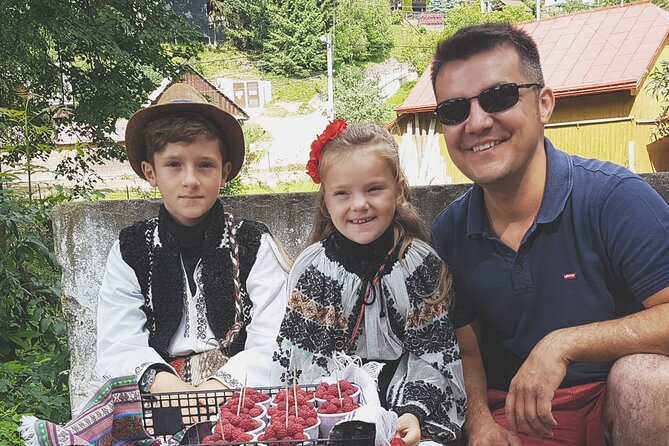
Day seven is the spiritual heart of the tour. Voronet Monastery was founded by Stephen the Great in 1488 and is famous for its intense blue frescoes, often called Voronet blue. The one-hour visit covers both the church and its outdoor murals, where biblical scenes appear across the walls.
Humor Monastery offers a different mood and structure. Its thick river-rock walls were built in 1530 after an earlier church was destroyed. The fortified design shows how worship and defense were often tied together in this part of Europe.
Sucevita Monastery is another fortified church with painted walls and a UNESCO World Heritage designation. Its murals present biblical scenes in a way that works even if you are not familiar with the Bible. The 45-minute stop is enough to see the main features, but you will need to keep moving.
Moldovita Monastery rounds out the day. Built in 1532, it combines Byzantine, Gothic, and Moldavian elements, with murals inside and outside. Four monasteries in one day may feel repetitive to some people. For others, the changing colors, layouts, and settings make this the most memorable part of the route.
Folk art and the Bicaz Gorges
Day eight begins with the Lucia Condrea Egg Museum in Moldovita. The collection contains more than 5,500 decorated eggs arranged across two floors and 56 display cases. One hour is enough for an introduction to this highly specific local art, though the museum will appeal most to people who enjoy craft and folk traditions.
The Popa Museum in Tarpesti was founded in the 1970s by sculptor Nicolae Popa in his own home. His life adds weight to the collection: he was wounded in the Second World War, imprisoned by the communist regime for opposing it, and later devoted himself to Romanian values and folklore. The one-hour visit connects personal experience with handmade art.
The Bicaz Gorges provide the day’s outdoor finish. A three-hour stop along the river gives you time to appreciate the road through the mountains and forests. Admission is included here, unlike at most other major sights. The gorge is also a useful break after several days of churches and museums.
Sighisoara, Biertan, and the final castle day
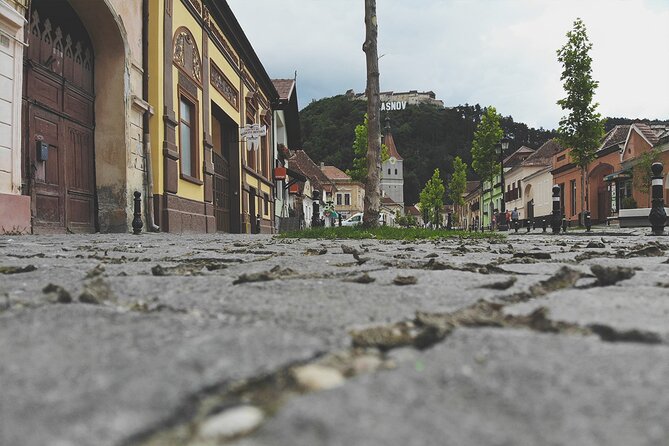
Sighisoara’s Clock Tower anchors a two-hour visit to the medieval citadel. The fortress has remained inhabited for more than 700 years, and its connection with Vlad the Impaler gives the town a Dracula association without turning it into a theme park.
The Clock Tower and Arms Museum help explain daily life and defense in the old town. Bring comfortable shoes for the historic center, since the point of Sighisoara is walking through its streets rather than simply viewing one monument.
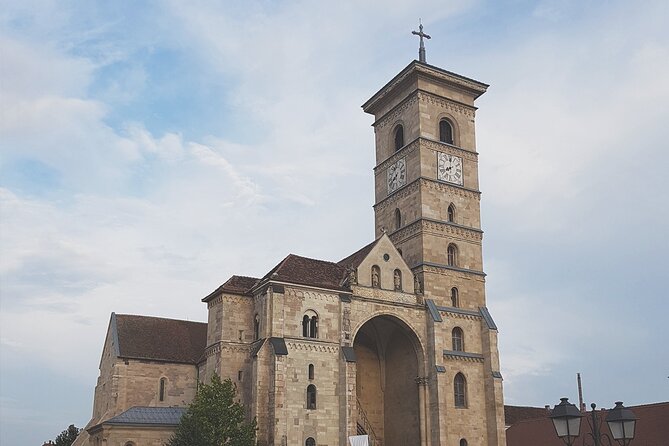
Biertan Fortified Church is set on a hill in the center of town, surrounded by three defensive walls and seven bastions. It is a UNESCO World Heritage site and a fine example of Transylvanian Saxon settlement. The two-hour stop gives the church more time than several of the monasteries, which is welcome for anyone interested in medieval architecture.
The last day brings three high-profile sights. In Brasov, you walk through the Old Town, see the Black Church and medieval walls, and have free time in the main square or a cafe. One hour is listed for the stop, so ask early if you want more time in town.
Bran Castle is the famous Dracula stop, but the historical and fictional links are not identical. The castle’s appearance fits the popular image created by Bram Stoker, which explains its fame. Outside, you can try traditional cheeses, plum or pear brandy, ham, and sausages, but these purchases are not included.
Peles Castle closes the itinerary with royal style. It was the Romanian royal family’s summer residence and is promoted as one of Europe’s most beautiful castles. Two hours allows a proper visit, though admission is extra.
What the $3,918.13 price buys you
The price is high for Romania, but it covers more than a standard sightseeing package. You get a private tourism car or minibus, an English-speaking licensed guide-driver, fuel, parking, road tolls, the guide’s accommodation and meals, and wireless internet in the vehicle.
The real value is control. You are not sharing the vehicle with strangers, and the daily plan can be changed even after the tour starts. That is useful on a ten-day route with mountain roads and many smaller sights.
The cost does not include your hotels, meals, beverages, or entrance tickets. Those extras can change the final budget considerably, especially because nearly every major stop lists admission separately. Group discounts may be available, but the advertised rate is per person.
I would compare the price with the cost of hiring a private car and guide for ten days, then add fuel, tolls, parking, hotels, and planning time. For a group of friends or family, the private format may make sense. For a solo visitor or a couple watching every expense, it is harder to justify.
Who should book this private Romania tour
I would recommend it to people who want to see many regions without managing Romanian roads, connections, parking, or hotel arrangements for the guide. It also suits families and friends who prefer their own vehicle and want to request changes along the way.
The tour is a good match for history fans, architecture lovers, photographers, and anyone curious about Romania beyond Bucharest and Bran Castle. You get Dacian archaeology, communist memory, rural buildings, churches, castles, and mountain scenery in one trip.
I would hesitate if you dislike long driving days or prefer spending several nights in each town. The route is ambitious, and the short visits at some sites mean you will see a lot without always having time to linger.
The guide matters here. Nicolas is praised for his company and his knowledge of Romania, and his role as guide-driver is central to the experience. A private tour becomes much better when the person behind the wheel can explain the country as you go.
FAQ
Where does the tour start?
The tour is based in Bucharest, and pickup is offered. You need to provide the pickup time, address, and phone number.
How long does the experience last?
The tour lasts approximately 10 days.
Is this a private tour?
Yes. The car or minibus is reserved for you and your friends or family, and only your group participates.
Is an English-speaking guide included?
Yes. A private licensed English-speaking guide-driver is available throughout the tour.
Is transportation included?
Yes. Private transportation, gasoline, parking, road tolls, and complimentary wireless internet in the vehicle are included.
Are hotels included?
No. Accommodation for you is not included. The provider covers accommodation and meals for the guide.
Are meals included?
No. Your meals and beverages are not included.
Are entrance fees included?
Most entrance fees are not included. The Bicaz Gorges admission is listed as included, while the other attractions generally require separate payment.
When is the Transfagarasan Highway fully open?
The highway is fully open only from June through October. Its highest point is 2,042 meters near Lake Balea.
Can the itinerary be changed?
Yes. The tour offers flexibility for changes to the daily itinerary, including changes after the tour has started.
What is the cancellation policy?
You can cancel at least 24 hours before the start time for a full refund. Cancellations or changes made within 24 hours are not accepted for a refund.
Should you book it?
Book this tour if you want a private, wide-ranging introduction to Romania and value a guide-driver who can manage the long route. The strongest reasons are the regional variety, the flexible schedule, and access to places that are difficult to connect independently.
Before paying, confirm the vehicle size, hotel arrangements, expected driving times, and the likely total cost of admissions and meals. If you want a slower holiday, ask to remove a few stops. If you want Romania’s castles, monasteries, mountain roads, villages, and difficult history in one carefully directed journey, this is a powerful choice.
Just added around Bucharest
- 4-Day Inside Transylvania & Transfagarasan Tour from Bucharest★ 5.0 · 3 reviews
- 10 hours Private Apiary Tour in Romania – From Bucharest★ 5.0 · 3 reviews
- Bucharest: Charm of the Belle Époque Private Tour★ 5.0 · 3 reviews
- Bran & Peles Castles through the Best Road in the World: Transfagarasan road★ 4.5 · 3 reviews
- 2-Day Small-Group Tour in Transylvania from Bucharest – Maximum 5 Persons★ 5.0 · 3 reviews
- Private Wine Tasting at Bucharest’s First Wine Bar★ 5.0 · 3 reviews
- Bucharest to Brasov – Fast Private Transfer★ 5.0 · 3 reviews
- Probably the Best Restaurant and Wine Cellar near Bucharest★ 4.5 · 3 reviews
Private, compared.
Castles of Transylvania: Private Day Trip from Bucharest
Read our review →
Dracula’s Castle, Peles Castle and Brasov – Private Day Trip from Bucharest
Read our review →
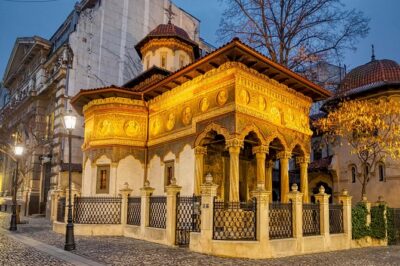
Bucharest Panoramic Sightseeing – Private City Tour
Read our review →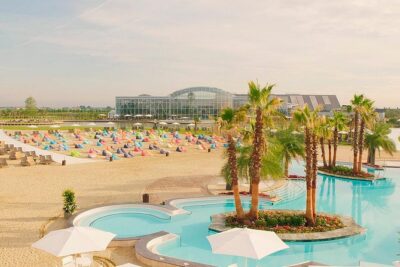
THERME “Take It Easy” Pack: Full Spa Access + Private Transfers
Read our review →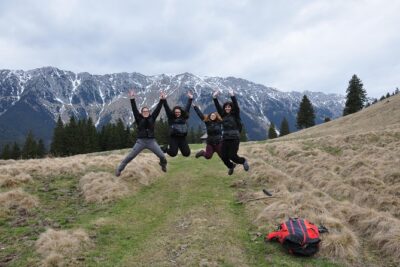
Piatra Craiului National Park Private Hiking Tour from Brasov
Read our review →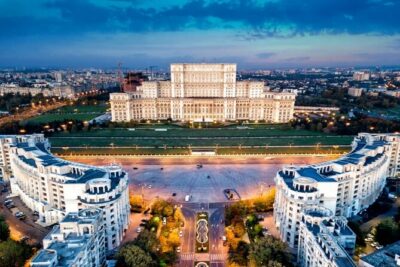
4h Bucharest Private Tour (2h by Car and 2h Walking in Old Town)
Read our review →